PLC (PosterolateralCorner) Repair
Advanced anatomical reconstruction of the complex outer-knee pillar for rotational stability.
PLC (Posterolateral Corner) Repair
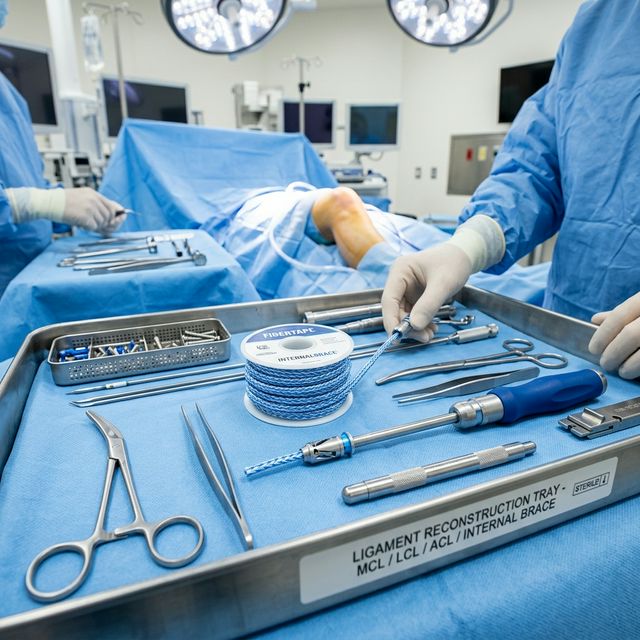
The Posterolateral Corner (PLC) is a complex arrangement of ligaments and tendons on the outer and back side of the knee, including the LCL, popliteus tendon, and popliteofibular ligament. Dr. Ravi Teja specializes in the reconstruction of these structures, which are vital for preventing excessive external rotation and varus gapping. PLC injuries are technically demanding and often require precise reconstruction using grafts to restore the knee's 'outer-pillar' stability. Addressing PLC laxity is critical, especially when performed alongside ACL or PCL reconstructions, to ensure the long-term success of all involved grafts.
Surgical Process
Rotational Mapping
Using the dial test and clinical exam to quantify external rotation laxity.
Graft Channeling
Creating anatomical tunnels in the femur, tibia, and fibula to house the new PLC complex.
Tension Stabilization
Securing grafts in a specific order to balance and restore rotational control.
Patient Care
Recovery Roadmap
Recovery is a gradual process, typically involving a protective brace for 6 weeks and strict crutch use to protect the new grafts. Return to sports and high-level activities usually occurs between 9-12 months post-surgery.
Who Needs This Procedure?
Patients with Grade 3 PLC injuries causing severe rotational instability
Individuals with persistent 'sideways' gapping that hasn't responded to bracing
Patients having concurrent ACL or PCL reconstruction where the PLC is also injured
Patients with chronic outer-knee instability from neglected old injuries
Clinical Results & Gallery
Procedural Intelligence
Elite Patient Care
Dr. Ravi Teja provides personalized evaluations using the latest diagnostic technology for PLC (Posterolateral Corner) Repair.
Book EvaluationElite Standard
Certified Excellence
Safety First
Minimal Complications